Search Amazon for Booker Little Music
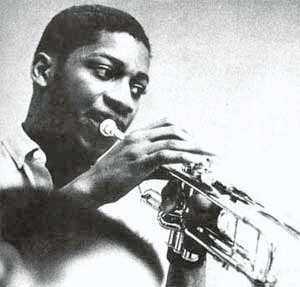
Booker Little was a prodigious jazz trumpeter and composer whose brief but impactful career left a lasting impression on the world of modern jazz. Born on April 2, 1938, in Memphis, Tennessee, Little grew up in a musically inclined family and was drawn to the trumpet at an early age. He studied classical trumpet before immersing himself in jazz, eventually enrolling at the Chicago Conservatory of Music. It was there that he met and formed a close association with drummer Max Roach, who became an important mentor and collaborator.
Little's playing was marked by a lyrical sensitivity, technical precision, and an emotionally resonant tone that set him apart from many of his peers. He was deeply influenced by the work of Clifford Brown but developed a voice that was uniquely his own. His collaborations in the late 1950s and early 1960s with Roach, Eric Dolphy, and John Coltrane placed him at the forefront of the post-bop and avant-garde movements. Particularly notable was his partnership with Dolphy, with whom he recorded several groundbreaking albums that blended structured composition with daring improvisation.
Despite his youth, Little was also a gifted composer, known for writing harmonically rich and challenging pieces. His work on albums such as Out Front and Booker Little and Friend demonstrated a mature, forward-thinking approach to jazz writing and arrangement. He was admired by fellow musicians for his intellectual rigor and his ability to express deep emotion through tightly controlled yet adventurous playing.
Tragically, Booker Little's career was cut short when he died of uremia at the age of 23 on October 5, 1961. Though his life and output were brief, his influence looms large in the jazz world. His music continues to inspire generations of musicians and listeners with its beauty, intensity, and uncompromising vision. Booker Little remains one of jazz's most poignant examples of unfulfilled potential, and a reminder of the brilliance that can shine even in a short life.